Herbal extracts rarely keep the same appearance forever. Light, oxygen, heat, moisture, and trace metals can gradually alter sensitive plant pigments. Chlorophyll may fade from green to olive, while anthocyanins can shift toward brown or purple.
So, why do herbal extracts change color over time? The answer usually involves oxidation, pigment breakdown, pH movement, and reactions between natural compounds. Dr. Mary Ann Lila, a respected phytochemical researcher, has described plant compounds as “sensitive to their environment.” That short observation explains why two similar batches can age differently.
A reliable stability plan begins with careful control. Use opaque containers, reduce headspace oxygen, and limit repeated exposure to warm air. Store extracts under documented temperature conditions. Monitor pH, moisture, and light exposure during testing. Color measurement can reveal early changes before customers notice them. More advanced laboratories may combine visual records with HPLC or spectrophotometric analysis.
Small details matter. A clear bottle near a sunny window can change faster than expected. A poorly sealed cap may invite oxidation overnight. Yet color change does not automatically prove that an extract has lost all value. It may indicate degradation, concentration changes, or a harmless pigment reaction. That distinction requires evidence.
No method is perfect. Some natural variation remains unavoidable. The practical goal is not an artificial color. It is a stable, traceable, and scientifically defensible product. This guide explains how formulation, packaging, storage, and testing can work together to slow unwanted color changes over time.
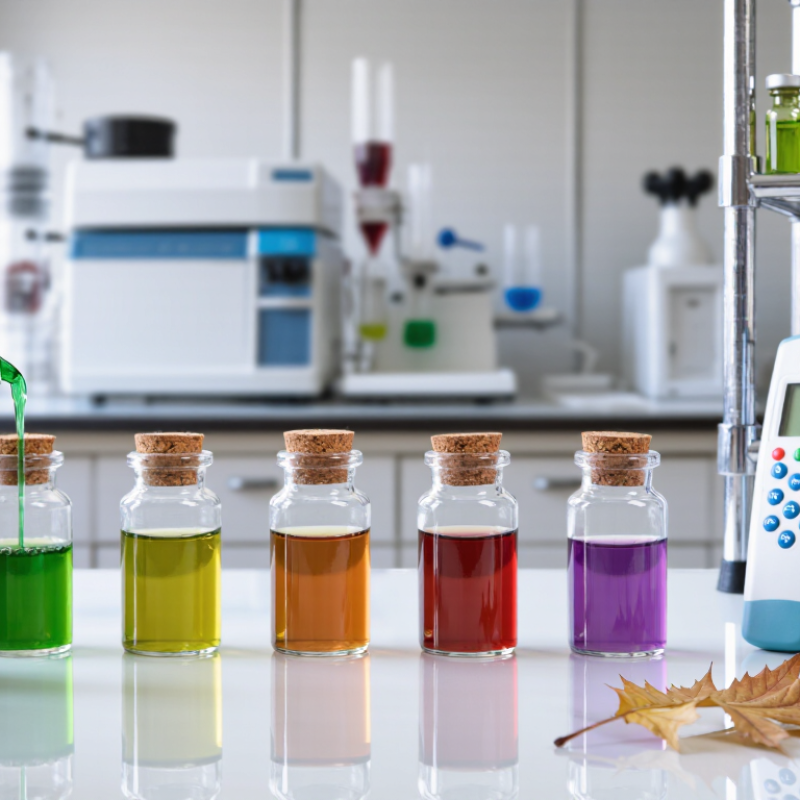
Color change usually begins with oxidation. Oxygen can darken polyphenols and convert pale extracts into brown or reddish tones. Light accelerates this reaction, especially in transparent containers. Heat matters too. The International Council for Harmonisation’s Q1A(R2) guideline uses 40°C and 75% relative humidity for accelerated stability testing, conditions that can expose weak packaging quickly.
Moisture is another major cause. The World Health Organization’s Quality Control Methods for Herbal Materials identifies water content, storage temperature, and contamination as key quality variables. A 2021 review in Plants also describes pH as critical for anthocyanin stability. Acidic extracts may remain red, while higher pH can shift them toward purple, blue, or dull brown. Minerals can react with plant compounds as well. Trace iron or copper may increase oxidation, even when the extract looks clean at filling.
I would not treat every darkening event as spoilage. That assumption is too simple. However, an unexpected odor, sediment, gas formation, or rapid color shift needs investigation. Compare retained samples under controlled light and temperature. Record pH, moisture, oxygen exposure, and container type. Small production differences can matter.
In practice, opaque packaging, reduced headspace, and validated temperature limits often protect color better than preservatives alone. The weak point is usually overlooked: raw botanical variability. Harvest maturity, drying time, and extraction conditions can change the starting color before storage begins.
Keeping herbal extracts color-stable starts with choosing naturally stable herbs. Pale roots and seeds often resist visible browning better than anthocyanin-rich flowers. However, this is not universal. Harvest maturity, drying temperature, and moisture can change the result. WHO quality-control guidance recommends checking identity, moisture, ash, and extractive values for each batch. These tests reveal hidden instability before color changes become obvious.
Extraction materials matter just as much. Use clean, food-contact stainless steel or compatible glass. Avoid reactive metals that may accelerate oxidation. Amber glass also limits light exposure during storage. Under ICH Q1A(R2) stability guidance, accelerated testing commonly uses 40°C and 75% relative humidity for six months. That condition is severe, but useful. Compare color, odor, pH, and marker compounds at set intervals. Real-world testing at 25°C is still necessary.
Tips: Choose low-moisture herbs with consistent harvest records. Keep extraction temperatures controlled. Remove excess oxygen when practical. Store finished extracts in tightly sealed amber containers. Check headspace, too. A small air gap can matter. I have seen color drift after improving the herb but ignoring the container. That mistake is easy to repeat. Record photographs under identical lighting, because visual judgment alone can be misleading.
Herbal extracts often darken because pigments, polyphenols, and sugars react during storage. Control the environment before changing the formula. ICH Q1B photostability guidance uses 1.2 million lux hours and 200 watt-hours per square meter of near-ultraviolet exposure for testing. This is severe exposure, but it reveals weak packaging quickly. Use opaque containers, reduce filling-room light, and limit open-vessel time. Amber packaging alone may not protect every extract.
Oxygen deserves equal attention. Measure headspace oxygen when possible, then reduce it through nitrogen flushing and tight closures. Keep transfer lines short and clean. Heat accelerates oxidation and pigment breakdown. ICH Q1A(R2) identifies 40°C and 75% relative humidity for six months as an accelerated stability condition. Do not treat that result as a direct shelf-life prediction for every botanical extract. Real materials behave differently.
Moisture can change both color and texture. Monitor water activity, not only moisture percentage, because available water drives many reactions. Use moisture-barrier packaging and avoid repeated opening in humid rooms. Record the extract temperature, exposure time, humidity, and oxygen conditions for each batch. Small details matter. In our own process reviews, color shifts still appear when sampling tools warm under bright lights. That failure is easy to overlook. It deserves a documented corrective action, not a visual guess. References: ICH Q1A(R2), Stability Testing of New Drug Substances and Products; ICH Q1B, Photostability Testing of New Drug Substances and Products.
Color stability depends on the plant species, extract composition, solvent, and packaging. Use the controls below as general process guidance, then confirm suitable limits with product-specific stability testing.
| Factor | How It Can Affect Color | Practical Processing Controls | What to Monitor |
|---|---|---|---|
| Light | Ultraviolet and visible light can accelerate the degradation of light-sensitive pigments and other plant constituents, causing fading or shifts in hue. | Reduce unnecessary exposure during extraction, transfer, sampling, and filling. Use covered vessels or opaque process lines where practical, and select light-protective packaging when appropriate. | Record exposure conditions during processing. Compare color against a retained, protected reference sample at defined intervals. |
| Oxygen | Oxygen can promote oxidation of susceptible constituents, which may lead to darkening or other color changes. | Limit splashing and excessive aeration. Keep vessels closed when practical, minimize headspace during filling, and consider an inert-gas blanket when compatible with the process and product. | Review vessel closure and headspace practices. Track color and, where useful, dissolved oxygen or headspace oxygen using a validated method. |
| Heat | Elevated temperatures or prolonged heating can accelerate degradation, alter pigment structures, and concentrate an extract as solvent is removed. | Use the lowest effective process temperature and avoid unnecessary hold time. Consider vacuum concentration when suitable, and cool the extract promptly after heat-based steps. | Log product temperature and time at each processing stage. Assess color before and after heating or concentration. |
| Moisture | Water content can affect chemical stability and may support microbial growth in susceptible products. Its effect on color depends on the extract and formulation. | Control drying and storage conditions for powdered extracts. Use moisture-resistant packaging where needed, and avoid introducing water through equipment, closures, or handling. | Measure moisture content or water activity with a suitable validated method. Establish product-specific acceptance limits rather than assuming one limit applies to every extract. |
| Packaging and storage | Light, oxygen, heat, and moisture can continue to affect color after processing if the container or storage conditions do not provide adequate protection. | Select packaging compatible with the extract and its solvent. Store tightly closed containers under controlled conditions specified for the product, away from direct light and avoidable heat. | Check container integrity and storage records. Include color observations in a stability program using representative batches and packaging. |
| Color measurement | Visual appearance can vary with lighting, sample thickness, and observer, making small changes difficult to compare consistently. | Use a consistent sampling procedure and fixed viewing conditions. For quantitative comparison, use an appropriate colorimeter or spectrophotometer and a documented measurement method. | Record the instrument, method, sample preparation, and results. Set product-specific limits based on development and stability data. |
How to Keep Herbal Extracts from Changing Color Over Time
Use Safe Stabilizers and Proper Storage Containers
Light, oxygen, heat, and shifts in acidity can change an herbal extract’s color. A darker shade does not always mean the extract has spoiled, but sudden cloudiness, an unusual smell, or visible growth deserves caution. Color alone cannot confirm safety.
Choose stabilizers only when they are appropriate for the ingredients and intended use. Food-grade acids, such as citric acid, may help limit oxidation in some water-based preparations, but they can also affect flavor and stability. Do not add preservatives by guesswork. Check reliable formulation guidance, measure carefully, and keep notes on each batch. Small tests matter.
Tips: Store extracts in clean, airtight amber glass bottles, leaving little empty space above the liquid. Keep them in a cool, dry cupboard away from sunlight, ovens, and damp sinks. Use a clean dropper or spoon each time; fingers can introduce contaminants. Label each bottle with its contents and preparation date. Check it regularly. Even careful storage cannot prevent every change, and some color variation may be natural.
Color drift is easier to manage when each batch has a recorded starting point.
Measure color under consistent lighting, against a white background, using the same sample depth and container. A calibrated colorimeter can track L*, a*, and b* values; photographs help, but camera settings can quietly distort comparisons. Keep the method fixed. Record the lot number, extraction date, storage temperature, light exposure, and test result. Small details matter: a half-filled vial may expose more extract to air than a full one.
Set a review schedule based on the extract’s risk and intended shelf life.
ICH Q1A(R2), an established stability-testing guideline, describes long-term studies commonly extending to at least 12 months and accelerated studies lasting six months. Its conditions offer a useful study-design reference, not a universal rule for every herbal extract. Test appearance alongside relevant measures such as moisture, pH, or marker compounds; color alone cannot establish quality. Compare results with a written acceptance range, and investigate gradual shifts before they become obvious. Keep the raw readings, instrument calibration checks, and any changes to the test method. Records are rarely perfect. A missed reading or inconsistent sample preparation should be noted, not quietly ignored.
Oxidation often darkens polyphenols, turning pale extracts brown or reddish. Light and heat accelerate this reaction. Oxygen is the quiet trigger.
Yes. Moisture can change color, texture, and stability. Water activity often reveals risk better than moisture percentage alone. Humid rooms deserve caution.
pH can shift pigments between red, purple, blue, and dull brown tones. Acidic extracts may remain red. Higher pH can create unexpected changes.
No. Color change alone does not prove spoilage. Investigate unusual odor, sediment, gas, or rapid changes. I would avoid judging by color alone.
Opaque or amber containers reduce light exposure. Tight closures limit oxygen and moisture entry. A small headspace can still matter.
Keep vessels covered and limit open-air exposure. Short, clean transfer lines help. Nitrogen flushing may reduce headspace oxygen when suitable.
Record temperature, humidity, light exposure, oxygen, pH, and container type. Store samples at realistic conditions, not only severe accelerated conditions. Real life differs.
Compare retained samples at set intervals under controlled light and temperature. Record photographs using identical lighting. Also check odor, pH, moisture, and marker compounds.
Yes. Harvest maturity, drying temperature, and extraction conditions can alter color before storage. Better packaging cannot fully correct inconsistent raw materials.
Teams may improve the herb but ignore the container or sampling process. Warm tools and bright lights can distort observations. That weakness deserves review.
Herbal extracts can gradually change color because natural pigments and active compounds react with oxygen, light, heat, moisture, or unsuitable processing conditions. The question “why do herbal extracts change color over time” is important for maintaining product quality. Some herbs are naturally more stable than others, so selecting appropriate plant materials and extraction solvents can reduce unwanted color shifts. Careful control of temperature, exposure to air, light, and humidity during processing also helps protect sensitive compounds.
Safe, suitable stabilizers may further support color consistency when used correctly and within applicable requirements. Extracts should be placed in clean, well-sealed, light-resistant containers that match the product’s characteristics. Regular color checks, supported by simple testing and complete production records, can help identify changes early and reveal possible causes. By combining careful ingredient selection, controlled processing, protective packaging, and consistent monitoring, producers can improve the appearance, stability, and overall quality of herbal extracts over time.

Aeterna Biotech